
Blog / Training Update
Fatigue Isn't Always What You Think, Training Update #6
What fatigue actually means, and what to do about it.
May 2026 · 7 min read
Intervals, Zercher squats, the mid-arvo slump, and why electrolyte hydration matters more than you think. IAC Melbourne, Training Update #6.
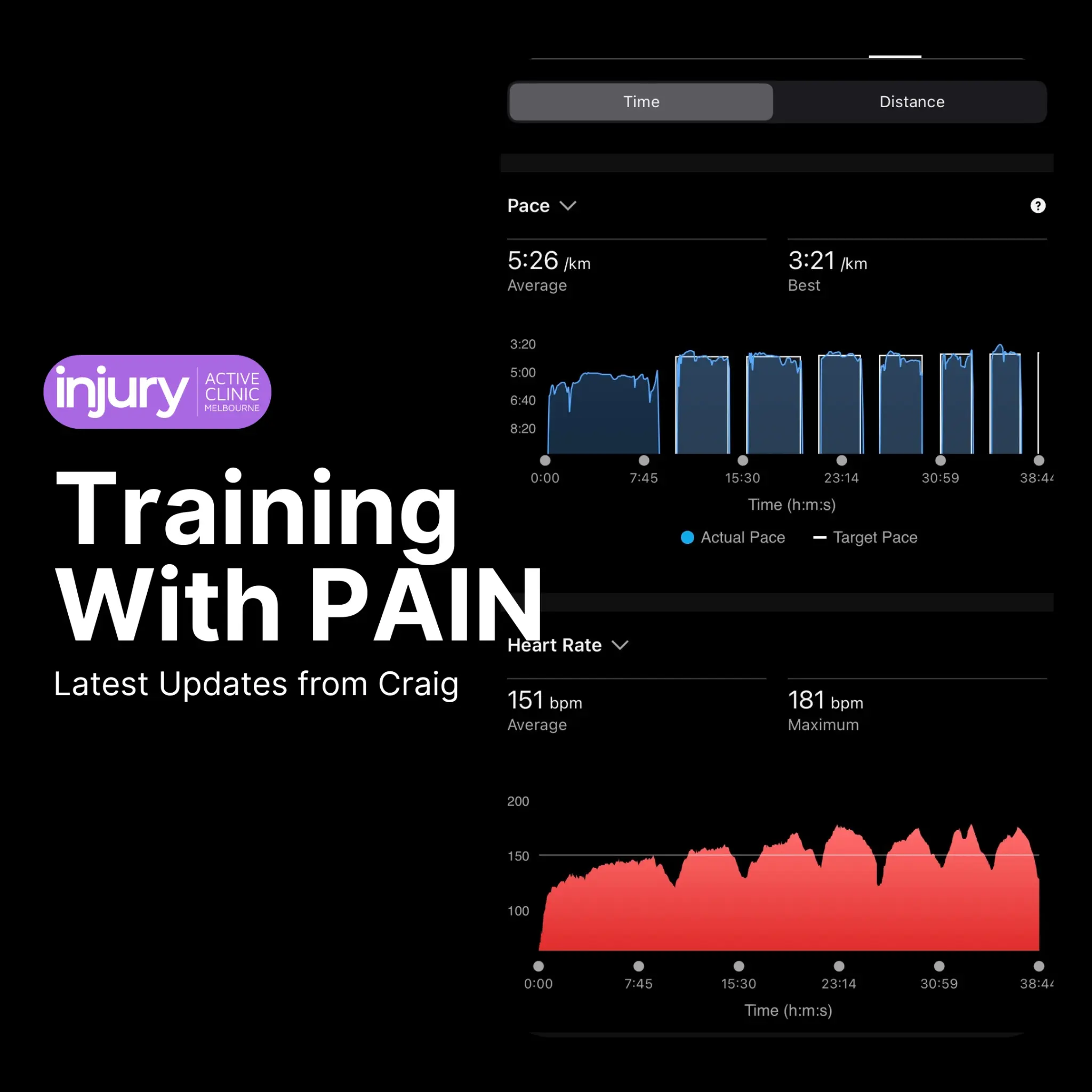
I'm writing this feeling pretty depleted after my interval session.
They're designed to push you into uncomfortable territory, training your ability to tolerate harder efforts, recover quicker, and improve your efficiency at higher speeds.
The toughest part was trying to hold pace around Caroline Springs where even slight inclines suddenly feel very significant when your legs are full of fatigue.
High intensity aerobic work like intervals improves:
In simple terms: they help you run faster for longer before fatigue takes over. They're uncomfortable while doing them but incredibly effective when programmed properly.
Saturday: Tempo work, 7:30am, Keilor Little Athletics Track.
The goal is simple: maintain consistency across all rounds.
Sunday: 17km easy long run in the city. (I won't be at Brimbank Sunday morning.)
It's Friday and, honestly, I was still feeling Monday's leg session right up until yesterday.
The combination of high volume barbell squats and Zercher squats introduced a stimulus most of us haven't had in a while, which explains the DOMS many of you felt during the week.
Zercher squats shift the load to the front of the body by holding the bar in the elbows rather than across the back.
This changes the centre of mass significantly and usually allows people to:
They look awkward initially, but they're a brilliant variation when used properly.
And as many of you discovered this week, they definitely make themselves known afterwards.
Most people hit a wall in the afternoon and immediately reach for another coffee.
The problem? That extra caffeine hit, especially after lunch, often comes at the expense of the most powerful recovery tool we have: sleep.
And it often leaves people needing even more caffeine the next day.
The issue is that when we sweat, we don't just lose water, we lose electrolytes, particularly sodium.
And if you only replace fluids with plain water, you're not always replacing what your body actually needs to function optimally.
This is why many people feel noticeably better by simply adding:
Especially if you're active, training hard, or sweating a lot.
This doesn't mean loading everything with salt unnecessarily. It just means understanding that hydration is more than "drink more water."
Final call for the latest IAC merch order. If you'd like anything, reply with the item and your size and we'll organise the order from there.
We receive approximately 30% off retail pricing and pass that directly onto members.
Reminder that our next mobility workshop is on tomorrow at 10:30am. We'll be covering:
As always, the goal isn't random stretching for the sake of it, it's improving movement options where they matter. You can register via Courses in the app.
Train hard, recover properly, hydrate intelligently, and focus on consistency over intensity spikes.
This article is for general information and educational purposes only. Training loads, session data, and hydration strategies described are based on individual experience and should be adapted under the guidance of a qualified health or fitness professional.
Back from deload: 18 rounds of hill sprints at Cardiac Hill, under & over threshold sessions, lateral raises into pike handstand holds, and the Q2 workshop with Dr Samina Kausar.
Deload week explained: supercompensation, why fatigue masks fitness, box squats, goblet cyclist squats, and what's changing in your strength.
Related conditions & services
Ready to move better?
Book an appointment with our team and let's get to the root cause of what's bothering you.