

Blog / Pain Science
Training with Pain: Why Avoiding Discomfort Isn't Always the Answer
Modern pain science says: rest isn't always the answer.
April 2026 · 9 min read
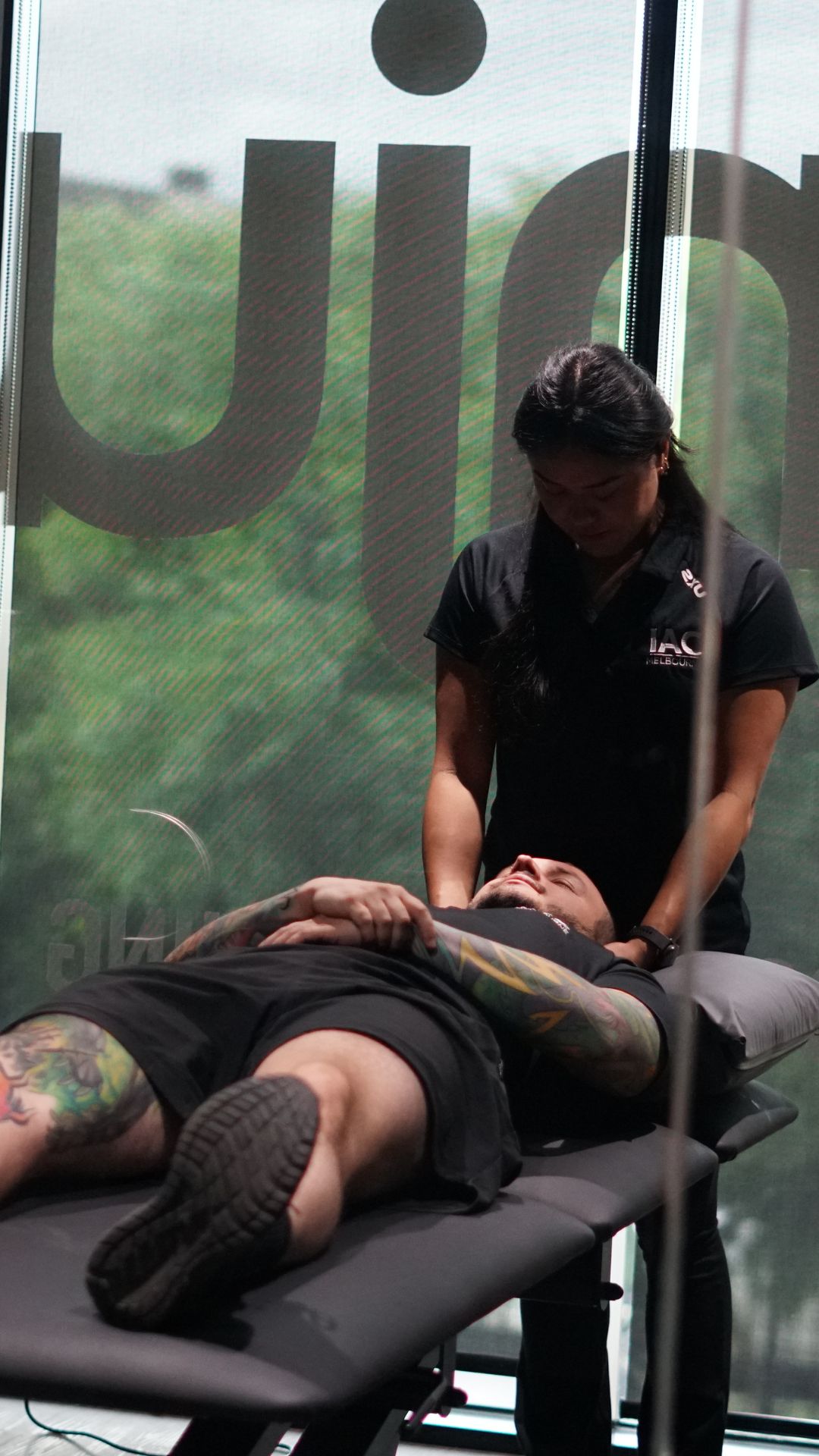
Modern pain science has fundamentally changed how we understand and respond to pain during training. Here's what the evidence says, and how we apply it at Injury Active Clinic.
When we experience pain during a workout or a run, our instinct is usually to stop immediately. For decades, the prevailing wisdom swung between "no pain, no gain" on one extreme and "stop if it hurts" on the other. However, modern pain science and tendon research have revolutionised our understanding of what pain actually means, and how we should respond to it.
At Injury Active Clinic, our physiotherapists, exercise physiologists, and coaches integrate these evidence-based principles into our small-group performance gym and 6-week training programmes across our Ravenhall and Altona locations. We believe that training with pain, when done correctly and safely, is often a crucial part of the rehabilitation and performance journey.
To understand how to train with pain, we first need to understand what pain actually is. Historically, pain was viewed as a direct measure of tissue damage, if your knee hurt, it meant your knee was injured; if it hurt more, it meant more damage. This model is now known to be incomplete.
Groundbreaking research led by Professor Lorimer Moseley has fundamentally shifted this paradigm.1 We now understand that pain is an output of the brain, not an input from the tissues. It is a protective mechanism designed to change behaviour and keep us safe. The brain weighs multiple inputs, sensory information from the body, past experiences, beliefs, fear, and stress, to determine whether the body is in danger.2 If the brain concludes there is a threat, it produces pain to make you stop what you are doing.
"Pain does not always equal tissue damage. You can have significant pain with no tissue damage, and you can have significant tissue damage with no pain."
When recovering from an injury, the nervous system often becomes hypersensitive. It starts producing pain signals long before you reach the limits of your tissue's physical capacity. In these cases, stopping exercise entirely when you feel a twinge can actually be counterproductive, leading to deconditioning, increased fear of movement, and a lower threshold for pain in the future.3
Nowhere is this concept more relevant than in the management of tendon pain, or tendinopathy. Achilles and patellar tendinopathies are incredibly common among athletes and gym-goers. The traditional approach was to rest until the pain subsided, then slowly return to activity. But anyone who has tried this knows the frustrating reality: the pain almost always returns as soon as loading resumes.
Professor Jill Cook and Craig Purdam, leading researchers in tendon pathology, proposed the "continuum model" of tendinopathy.4 They identified that tendons exist on a continuum from normal, to reactive (an acute response to overload), to tendon dysrepair, and finally to degenerative tendinopathy. A key finding of their research is that rest is actually detrimental to tendon health. Tendons need load to maintain their structure and capacity.5 When you rest a painful tendon, it loses capacity, and when you return to your previous level of activity, the tendon is now less capable of handling that load, leading to a reactive response and more pain.
Research by Dr. Ebonie Rio and colleagues has shown that heavy isometric exercises, holding a muscle contraction without moving the joint, like a wall sit or a static calf raise, can have a profound analgesic (pain-relieving) effect on tendons.6
These isometric holds not only reduce pain but also decrease cortical inhibition, the brain's tendency to reduce a muscle's ability to contract when a tendon is painful. This concept, known as "Tendon Neuroplastic Training," highlights the importance of addressing both the local tissue and the brain's motor control in rehabilitation.7
If pain doesn't always equal damage, and loading is necessary for recovery, how do we know how much pain is acceptable during training? Researchers and clinicians have developed a pain-monitoring model to guide rehabilitation, particularly for tendinopathies.8 This model suggests that experiencing some pain during exercise is acceptable, provided it stays within certain parameters.
Acceptable to continue training. Pain is mild and manageable.
Acceptable during exercise, but should not increase. Monitor closely.
Too high. Modify the exercise, reduce the load, or stop.
The most critical component of the pain-monitoring model is the 24-hour response. It is less about the pain you feel during the exercise, and more about how the tissue responds the next day.
If your pain settles back to its baseline level within 24 hours of the training session, and you do not experience increased morning stiffness, the load was appropriate. The tendon tolerated the work.
If the pain is significantly worse the next day or remains elevated for more than 24 hours, the load was too high, and you need to adjust your training.
At Injury Active Clinic, we apply these principles of pain science and load management within our small-group performance gym. We understand that recovering from an injury or managing chronic pain can be daunting, which is why our 6-week training programmes are designed around the concept of graded exposure.
Graded exposure involves gradually and systematically reintroducing the body to movements and loads that it previously found threatening or painful.9 By starting at a manageable level and slowly increasing the challenge, we teach the brain that these movements are safe, reducing the protective pain output over time.
In our small group classes, our coaches and allied health professionals work together to ensure you can train effectively, even if you are managing a niggle or an ongoing condition.
We don't believe in a one-size-fits-all approach. If a back squat causes unacceptable pain, we might modify it to a goblet squat, a box squat, or a leg press, finding the variation that allows you to load the tissues within the Safe or Acceptable zones.
We carefully monitor the volume (reps and sets) and intensity (weight) of your training to ensure you are progressively overloading the tissues without exceeding their current capacity.
We educate our members about what their pain means. Understanding that a flare-up does not mean you have "undone all your hard work" or damaged a tissue is incredibly empowering, it reduces fear and anxiety, which in turn can reduce the pain experience itself.
Your rehabilitation exercises shouldn't be a separate, boring routine you do at home. We integrate your specific rehab needs, whether that's heavy isometrics for a cranky Achilles or core stability work for a sensitive lower back, directly into your gym programme.
Pain is a complex, multi-faceted experience. While acute, sharp pain should always be respected and investigated, the dull, aching pain of a tendinopathy or a chronic musculoskeletal issue often requires a fundamentally different approach. Avoiding pain entirely can lead to a downward spiral of deconditioning and increased sensitivity.
By understanding that pain is a protective output of the brain, and by utilising strategies like the pain-monitoring model and graded exposure, you can safely train with pain. At Injury Active Clinic, our goal is to bridge the gap between rehabilitation and high performance. Whether you are dealing with a stubborn tendon issue or looking to build robust, resilient strength, our team across Melbourne is here to guide you.
Learn to understand your pain, manage your load, and keep moving forward.
Strength training is one of the most effective, evidence-based strategies for managing osteoarthritis. Here's why.
Back pain in your 40s and 50s isn't just bad luck. Discover the real reasons it keeps returning, and the evidence-based treatments that actually fix it.
Related conditions & services
Ready to move better?
Book an appointment with our team and let's get to the root cause of what's bothering you.