

Blog / Headaches & Migraines
Headaches & Migraines Treatment in Caroline Springs: Evidence-Based Care at Injury Active Clinic Ravenhall
Why frequent headaches are common but not normal, and how a coordinated plan can change the pattern.
September 2026 · 6 min read
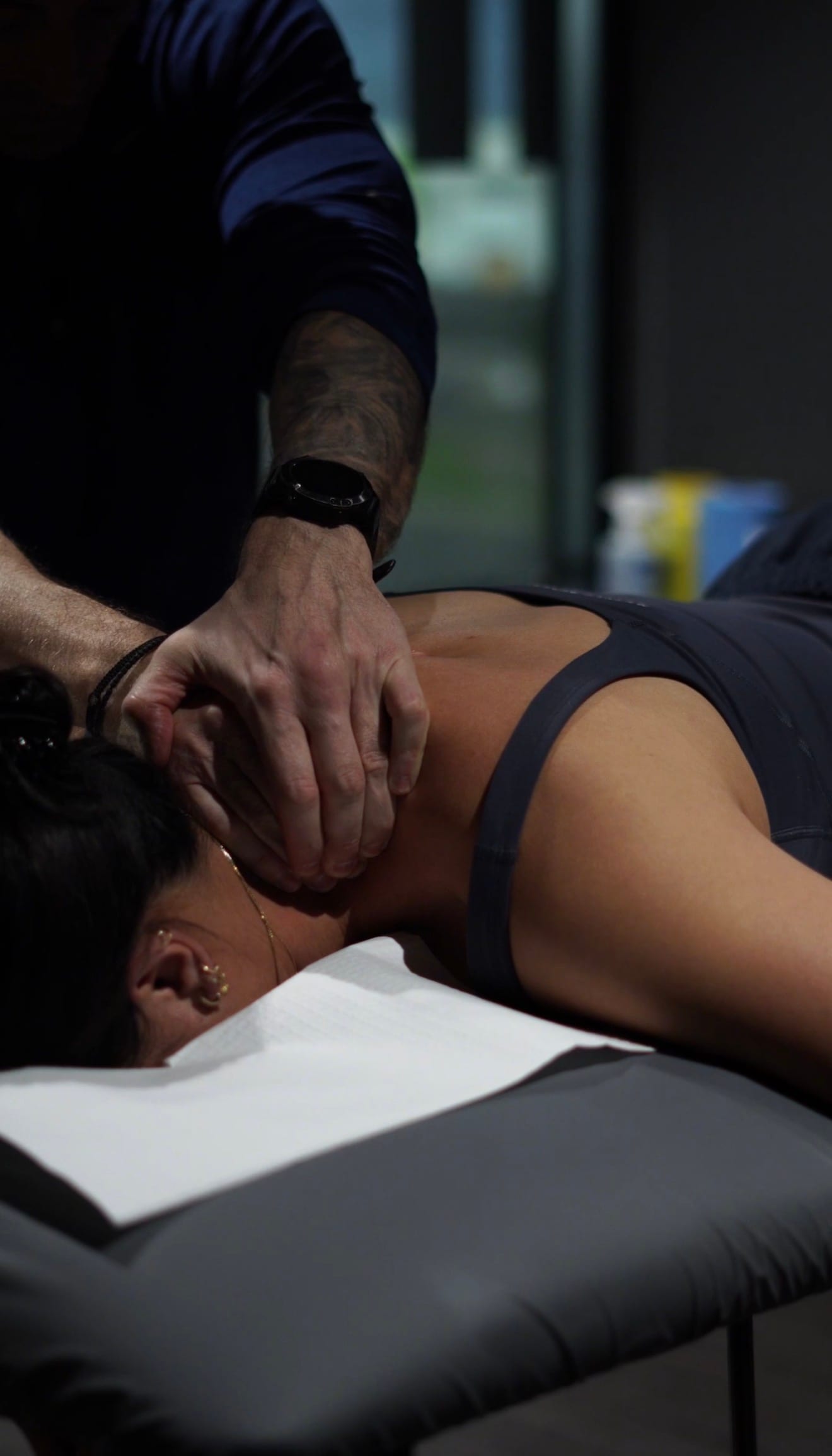
If you live in Caroline Springs and you are reaching for painkillers most weeks, you are in very good company. Headaches and migraines are among the most common reasons people come to see us, and also one of the problems people tolerate the longest before they do anything about it. A packet of ibuprofen in the glovebox, one in the desk drawer, one in the kitchen cupboard. That is a management strategy, but it is not a plan.
Here is the thing worth sitting with: headaches are common, but frequent headaches are not normal. Something is driving them. Our approach at Injury Active Clinic is the same for headaches as it is for a dodgy knee or a cranky low back. We find the cause. We fix the problem. We keep it away.
Not every headache is the same, and the label matters
The International Classification of Headache Disorders (ICHD-3, 2018) lists more than 200 distinct headache types. In practice, most of what we see in clinic falls into a few buckets.
- Tension-type headache. Usually both sides, a band or pressure quality, often building through the day. Commonly linked to sustained postures, load, stress and sleep.
- Migraine. Typically one side, throbbing, moderate to severe, often with nausea, light or sound sensitivity, and made worse by routine movement. It is a neurological condition, not a bad headache.
- Cervicogenic headache. Pain referred into the head from structures in the upper neck. Usually one side, often starting at the base of the skull and spreading forwards, and frequently reproducible with neck movement or sustained positions.
- Medication overuse headache. Regular analgesic use (often 10 or more days per month over several months) can paradoxically increase headache frequency. This one catches a lot of people out.
These categories also overlap. Plenty of people with migraine also have a genuinely irritable upper neck, and that neck contribution is often the part that responds well to hands-on and exercise-based care. Sorting out what is actually driving your pattern is the first job, not an afterthought. You can read more on our headaches and migraines condition page.
One important note. Headaches that come on suddenly and severely, follow a head knock, arrive with fever or neurological changes, or represent a clear change from your usual pattern need medical assessment first. We will always refer on when that is the appropriate call.
Where the neck comes into it
The upper three cervical segments share a sensory relay with the trigeminal nerve in the brainstem, an area often described as the trigeminocervical nucleus. In plain terms, input from your upper neck and input from your head and face arrive at the same switchboard. That is the anatomical reason why a stiff, irritable upper neck can produce pain that you feel behind the eye or across the temple.
It also explains why neck assessment is worth doing even when the diagnosis is migraine. Luedtke and colleagues (2016) reviewed physiotherapy interventions for migraine and found the evidence base promising, while noting the need for better quality trials. For cervicogenic headache the evidence is stronger. Jull and colleagues (2002), in a large randomised controlled trial published in Spine, found that manipulative therapy and a specific low load exercise programme each reduced headache frequency and intensity, with benefits maintained at 12 months. Combining the two was not worse than either alone, and many patients did well with the combination.
That is essentially the model we work from: skilled hands-on care to settle the irritable tissue, paired with targeted loading so the change holds. If your neck is also giving you grief between headaches, our page on neck pain is worth a look.
Pain does not equal damage, and motion is medicine
A lot of headache sufferers stop moving. Exercise feels like a trigger, so training gets dropped. The neck feels fragile, so it gets held rigid. Over months that becomes deconditioning plus fear-avoidance, and both tend to make the system more sensitive, not less.
The pain science here is important. Pain is an output of a protective system, heavily influenced by threat, sleep, stress and load history. It is not a reliable readout of tissue damage. Understanding that, as Moseley and Butler have argued across their work in pain education, is itself part of treatment, because it changes what you are willing to do.
And the movement evidence is encouraging. Varkey and colleagues (2011), writing in Cephalalgia, compared aerobic exercise, relaxation training and topiramate in people with migraine. All three groups improved, and exercise performed comparably to the medication on migraine frequency. That is not a reason to change any medication you are on, which is a conversation for your GP or neurologist, but it is a strong argument that structured exercise deserves a seat at the table.
How we treat headaches & migraines at IAC Ravenhall
Your first appointment at our Ravenhall clinic is an assessment, not a quick rub and a rebook. We want the full story: where the pain starts, where it travels, what a typical week looks like, what you have tried, how you sleep, what your work setup demands, how much medication you are using and how often. We then assess the upper neck and thoracic spine properly, looking at segmental movement, muscle endurance and control, jaw and breathing mechanics, and whether we can reproduce or ease your familiar pain. Reproducing your headache in the room is genuinely useful information.
From there you get one plan, delivered by one integrated team. We are not a corridor of separate services that pass you along. The person doing the hands-on work and the person coaching your loading programme are working from the same assessment, the same notes and the same goal, and they adjust together as you progress. Early on, the emphasis is usually on settling things down: osteopathy and manual therapy for the upper cervical and thoracic regions, plus practical changes to load, workstation and sleep position. Many patients find that combination takes the edge off within the first few weeks.
Then the plan moves. Our rehab gym sits in the same building at Ravenhall, so progressing from the treatment table to the gym floor is a few steps, not a referral and a three week wait. That continuity is the point. Deep neck flexor endurance work, scapular and upper back strength, graded aerobic conditioning and a return to whatever training you had abandoned. The hands-on work buys you the window. The loading work is what keeps it.
Keeping them away: strength and conditioning as treatment
This is the part people skip, and it is the part that determines whether you are back in six months. Neck flexor endurance, mid-back strength and general aerobic fitness are not optional extras bolted onto rehab. For headache presentations they are the treatment.
Most programmes we build run over roughly 8 to 12 weeks, with meaningful change in headache frequency often becoming visible somewhere in the 4 to 8 week range. Sessions are short, specific and progressive. We track headache days, not just how the neck feels on the day, because frequency is the number that actually changes your life.
Sleep, hydration, caffeine load and stress all get a mention too. Not as a lecture, but because they are modifiable inputs into a sensitised system, and ignoring them while doing everything else properly is leaving results on the table.
Headaches & migraines care for Caroline Springs, minutes from home
Our Ravenhall clinic is the closest Injury Active Clinic location to Caroline Springs, a short drive down the Western Freeway or via Caroline Springs Boulevard, and it serves the Caroline Springs, Burnside, Deer Park and Rockbank catchment. Treatment rooms and the rehab gym are under the one roof, which means your hands-on care and your strength work happen in the same place, coordinated by the same team, with no gaps for your plan to fall through. We also see patients at our Altona clinic if that is more convenient for your commute.
If headaches and migraines have quietly become part of your weekly routine, that is worth investigating properly rather than medicating around. Book a consultation at any of our Melbourne clinics to discuss your situation.
Related conditions & services
Ready to move better?
Book an appointment with our team and let's get to the root cause of what's bothering you.