

Blog / Hip Pain
Hip Pain Treatment in Caroline Springs: Evidence-Based Care at Injury Active Clinic Ravenhall
Why hip pain drags on for months, what the research actually supports, and how one coordinated plan gets you back to full load.
September 2026 · 7 min read
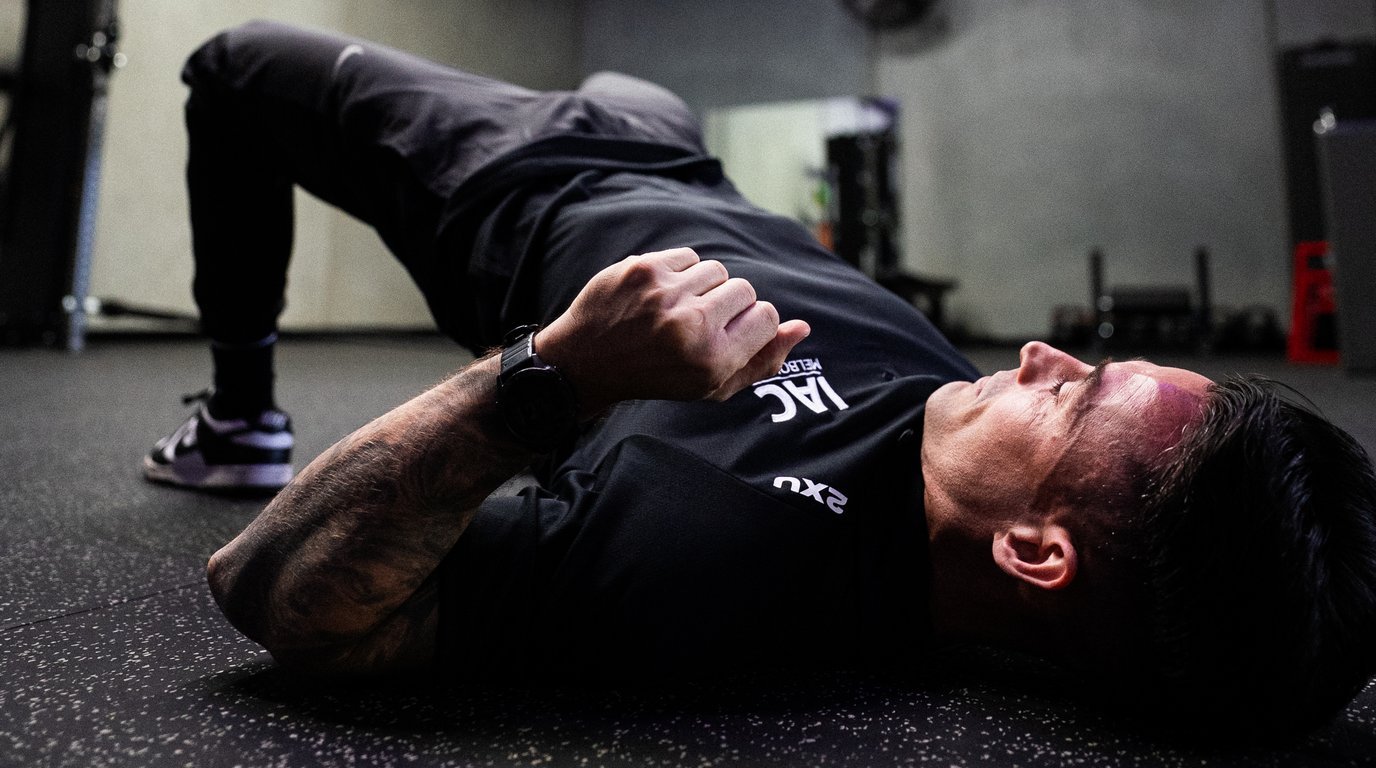
If you live in Caroline Springs and your hip has been nagging for longer than a few weeks, you have probably already tried the obvious things. Rest. Stretching it out. A foam roller on the side of the leg. Maybe a scan that came back with words like "degenerative change" or "bursitis". And yet the hip pain is still there when you roll onto that side at 2am, or when you get out of the car after the drive down the Western Freeway.
Hip pain is one of the most commonly mismanaged complaints we see. Not because it is complicated to assess, but because the standard advice (rest, stretch, wait) often makes it worse. Hips respond to load. Take the load away entirely and the tissue gets weaker, the joint gets stiffer, and the problem settles in for the long haul.
At Injury Active Clinic Ravenhall, our approach is simple and it does not change based on which body part walked in the door. We find the cause. We fix the problem. We keep it away.
Why hip pain in Caroline Springs residents often drags on
The hip is a deep joint surrounded by some of the largest muscles in the body. That means pain in the region can come from the joint itself, from the tendons that attach around it, from the lower back referring into it, or from a combination of all three. Getting that wrong at the start is the single biggest reason hip pain becomes a twelve month problem instead of a twelve week one.
The other issue is imaging. Hip scans in people over 40 very commonly show changes such as labral irregularity, cartilage wear or tendon thickening. Those findings are also extremely common in people with no pain at all. A scan describes tissue. It does not explain why that tissue became sensitive, or what to do about it.
So a report that says "gluteal tendinopathy with trochanteric bursitis" tells us the address of the problem. It does not tell us why the tendon became irritated in the first place, which is usually a story about load, capacity and how you move under fatigue.
The three patterns we see most often
Lateral hip pain (gluteal tendinopathy). Pain on the bony point on the outside of the hip. Classically worse lying on that side, worse on stairs, worse standing on one leg with the hip dropped. Often labelled bursitis, but the research has moved on. The primary driver is usually a compressive and overload problem at the gluteal tendons rather than an inflamed bursa in isolation. Grimaldi and Fearon (2015) laid out this assessment and management framework clearly, and it changed how these hips should be handled.
Hip osteoarthritis. Groin pain, stiffness first thing in the morning, loss of rotation, difficulty with socks and shoes. It is common, it is manageable, and it is not a sentence. Fransen and colleagues (2014) reviewed the exercise evidence for hip osteoarthritis and found land-based exercise may reduce pain and improve physical function, with benefits that can be sustained beyond the end of a supervised programme.
Hip-related groin pain and impingement-type symptoms. Deep front-of-hip pain with squatting, prolonged sitting, or change of direction in sport. The 2016 Warwick Agreement (Griffin and colleagues) defined femoroacetabular impingement syndrome as requiring symptoms, clinical signs and imaging findings together, not imaging alone. That distinction matters enormously for what happens next.
Pain does not equal damage: what the hip research actually shows
Two trials in the last decade should have changed how hip pain is managed everywhere.
Mellor and colleagues (2018), publishing the LEAP trial in the BMJ, compared education plus progressive exercise, a corticosteroid injection, and a wait and see approach for gluteal tendinopathy. At eight weeks the education and exercise group reported greater improvement in global change and pain than either of the other groups, and the advantage over wait and see was still present at 52 weeks. The injection worked in the short term. The loading programme held up better over time.
Griffin and colleagues (2018) ran the UK FASHIoN trial comparing hip arthroscopy with personalised hip therapy for femoroacetabular impingement syndrome. Both groups improved. The difference between them was modest, and it established supervised, progressive, individualised physiotherapy as a genuine first-line option rather than something you do while waiting for surgery.
The message running through both is consistent. Hips get better when you rebuild capacity, not when you protect them. Motion is medicine, and the discomfort you feel while loading a sensitised hip in a controlled way is not evidence that you are causing harm. Fear of movement, avoidance, and the deconditioning that follows are frequently doing more damage to your function than the original tissue problem ever did.
How we treat hip pain at IAC Ravenhall
Your first appointment is an assessment, not a treatment-first session. We want to know when the pain started, what it stops you doing, what it feels like at 6am versus 9pm, and what your week actually involves in terms of walking, sitting, training and work. Then we test. Hip range in every direction, single leg control, the tests that load specific structures, the lumbar spine to rule it in or out as a referral source, and how your knee, ankle and trunk behave when you are asked to produce force.
By the end of that session you should understand what is driving your hip pain, what is likely to change it, and roughly how long that process takes. If something in the picture does not fit, or if imaging or a medical opinion is warranted, we say so.
From there it is one plan, run by one integrated team. We do not hand you around. Hands-on work has a clear purpose early on, which is to reduce sensitivity and restore enough range for you to load properly. It is not the treatment on its own. It is what buys you the window to do the work that actually changes the outcome.
That work happens in our rehab gym, which sits inside the same building at Ravenhall. You are not sent elsewhere to do your exercises. The same team that assessed your hip watches you load it, adjusts weight and range in real time, and progresses you week by week from isometric holds and low-irritability work through to heavier loaded patterns, then to whatever your goal demands, whether that is the stairs at home, a return to netball, or a shift on your feet without limping by the end of it.
Strength and conditioning is not a bonus phase tacked on the end. It is the treatment. A hip that can produce and tolerate force is a hip that stops flaring, and that is the "keep it away" part of what we do. You can read more about our approach on our hip pain conditions page and our physiotherapy service page.
What a realistic timeline looks like
Irritable tendons and arthritic hips are not overnight jobs, and anyone promising otherwise is not being straight with you. Many patients notice meaningful change in symptoms within the first 4 to 8 weeks when loading is managed properly, with the structural strength gains that protect against recurrence continuing to build for several months beyond that.
The variables that matter most are how long the problem has been there, how much capacity you have lost, and how consistently the plan gets done. The tissue is rarely the limiting factor. Consistency usually is.
Getting to our Ravenhall clinic from Caroline Springs
Ravenhall is our closest clinic to Caroline Springs and serves the surrounding catchment including Burnside, Deer Park, Rockbank, Taylors Hill and Caroline Springs itself. It is a short drive via the Western Freeway, with parking on site and the rehab gym in the same building, so assessment and loaded rehabilitation happen in one visit rather than across two locations. We also see patients at our Altona clinic at 22 Reserve Court.
If your hip pain has outlasted the rest-and-stretch phase, the next step is a proper assessment to work out what is actually driving it.
Book a consultation at any of our Melbourne clinics to discuss your situation, or ask us about hip pain treatment for Caroline Springs locals at our Ravenhall clinic.
Related conditions & services
Ready to move better?
Book an appointment with our team and let's get to the root cause of what's bothering you.