

Blog / Sciatica
Sciatica Treatment in Caroline Springs: Evidence-Based Care at Injury Active Clinic Ravenhall
Understanding and treating sciatic nerve pain with modern rehabilitation.
July 2026 · 6 min read
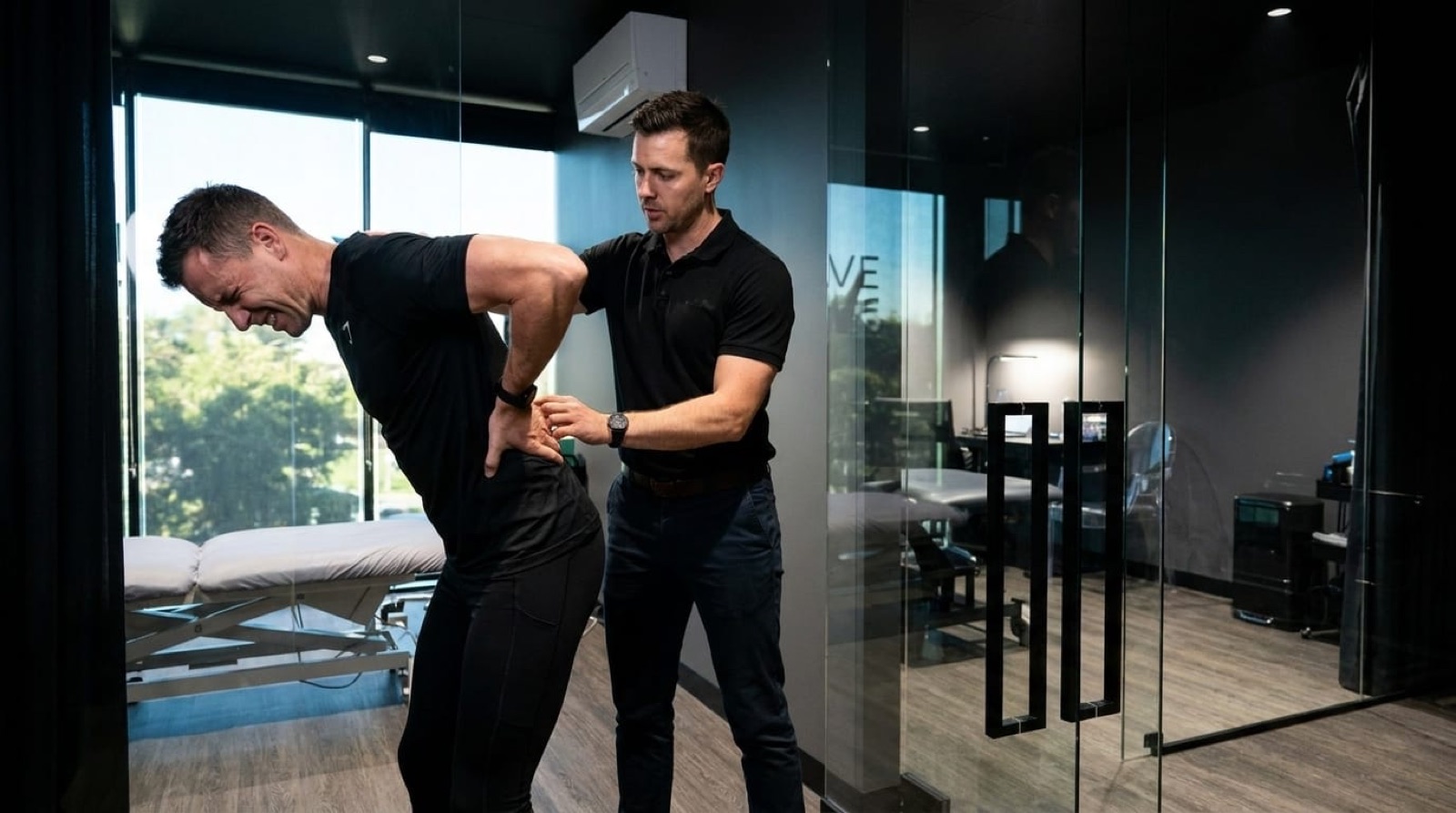
That sharp, electric pain that shoots from your lower back through your buttock and down your leg is not something you simply have to put up with. For people in and around Caroline Springs dealing with sciatica, understanding what is actually happening, and what genuinely helps, is the difference between short term relief and a lasting result.
What sciatica actually is
Sciatica is not a diagnosis in its own right. It is a symptom pattern. The sciatic nerve, the longest and thickest nerve in the body, runs from your lower back through your buttock and down each leg. When something irritates or compresses that nerve, you feel the burning, shooting or electric pain that sciatica is known for.
The usual culprits are a disc bulge pressing on a nerve root, tightness in the muscles deep in the buttock, or a narrowing of the spinal canal. Here is the part that matters most. In the large majority of cases the nerve is not damaged, it is irritated, and irritated nerves settle down when they are managed well.
The old advice of strict bed rest has not aged well. Multiple systematic reviews now show that staying gently active, within comfortable limits, leads to faster recovery and better long term outcomes than resting up and waiting for it to pass.
Why sciatica so often keeps coming back
We see a familiar pattern at our Ravenhall clinic, which serves the Caroline Springs community. People wait weeks hoping it will fix itself. They stop moving because it hurts. They gradually get weaker and stiffer, the nervous system becomes more sensitive, and what began as a simple mechanical irritation turns into a stubborn, complicated problem.
This cycle of fear and avoidance is well documented in the pain science research (Vlaeyen and Linton, 2000). Guarding against movement makes complete sense in the moment, but over weeks it is exactly what keeps the problem going. Muscles weaken, joints stiffen, and the nerve stays sensitive.
Breaking the cycle takes two things: settling the irritated nerve, and rebuilding capacity so it does not flare again. That is the whole idea behind how we work. We find the cause, we fix the problem, and we keep it away.
How we treat sciatica at IAC Ravenhall
Injury Active Clinic is one integrated team working from a single plan, not a set of separate services you get passed between. Your first appointment starts with understanding your particular presentation, because no two cases of sciatica are the same. We look at how you move, how the nerve behaves under gentle tension, how strong the surrounding muscles are, and just as importantly, your story: how it started, what makes it worse, and what you have already tried.
Early on, care usually combines hands-on treatment to calm the nerve and reduce protective muscle tension with clear, plain English education about what is going on. But we do not stop once the pain is quieter. As symptoms settle, the same plan continues straight into our rehabilitation gym in the same building, with no referral needed, where progressive strengthening rebuilds the capacity that protects the nerve for good. Because the treatment room and the gym sit under one roof, it all flows as one continuous piece of work rather than a series of disconnected appointments.
The evidence for exercise in sciatica recovery
Systematic reviews consistently show that exercise reduces pain and disability in sciatica. The key word is targeted. Progressive, supervised programmes that build control through the trunk, restore comfortable movement, and gradually return you to normal activity outperform passive treatment on its own.
Strength work is a big part of that. Research by Steele and colleagues (2017) found that progressive resistance training not only reduced pain but improved function and reduced the fear of movement. That last point is important. Confidence in your own body is often what finally breaks the cycle, and confidence is hard to rebuild from a photocopied exercise sheet. It comes far more easily when someone is guiding your load and correcting your technique as you go, which is what our rehabilitation gym is built for.
Where hands-on treatment fits
Exercise builds the lasting result, and hands-on treatment helps you get there faster. Techniques such as joint mobilisation, soft tissue work and gentle nerve mobilisation can bring real relief, especially in the early, angry stage. The strongest outcomes come from combining hands-on care with active rehabilitation and good education, rather than leaning on any single approach (Bussieres and colleagues, 2018).
Hands-on treatment here is never about making you dependent on the clinic. It opens a window of reduced symptoms so you can start loading and strengthening sooner. It is a bridge to active recovery, not the destination.
When to seek help in Caroline Springs
A small number of symptoms need urgent medical attention rather than clinic care: loss of bladder or bowel control, numbness around the groin or inner thighs, or leg weakness that is quickly getting worse. These are rare, but they warrant an immediate hospital assessment.
For typical sciatica, sooner is better. The longer nerve irritation carries on, the more sensitive the system becomes and the more compensations creep in, such as hip pain from a changed walking pattern or tension elsewhere from bracing against the pain. A lot of the people we see wish they had come in earlier. Modern pain science is reassuring here. Pain does not equal damage, and intense leg pain does not mean your nerve is being destroyed. Genuinely understanding that tends to change how quickly people recover.
Beyond the pain
Recovery is not only about switching symptoms off. It is about building more capacity than you had before it all started, which is the best protection against it returning. That is exactly what pairing clinical treatment with strength work in one building is designed to do, and it is why many people who have had sciatica finish stronger and more resilient than they were beforehand.
If you are near Caroline Springs and dealing with sciatica, our Ravenhall team can assess your particular presentation, explain in plain terms what is driving your symptoms, and build one clear plan that settles the nerve and rebuilds your strength. Book a consultation at Injury Active Clinic to get started.
Related conditions & services
Ready to move better?
Book an appointment with our team and let's get to the root cause of what's bothering you.