

Blog / Tendonitis
Tendonitis Treatment in Caroline Springs: Evidence-Based Care at Injury Active Clinic Ravenhall
Why tendon pain rarely settles with rest alone, and what a properly loaded rehab plan looks like.
November 2026 · 7 min read
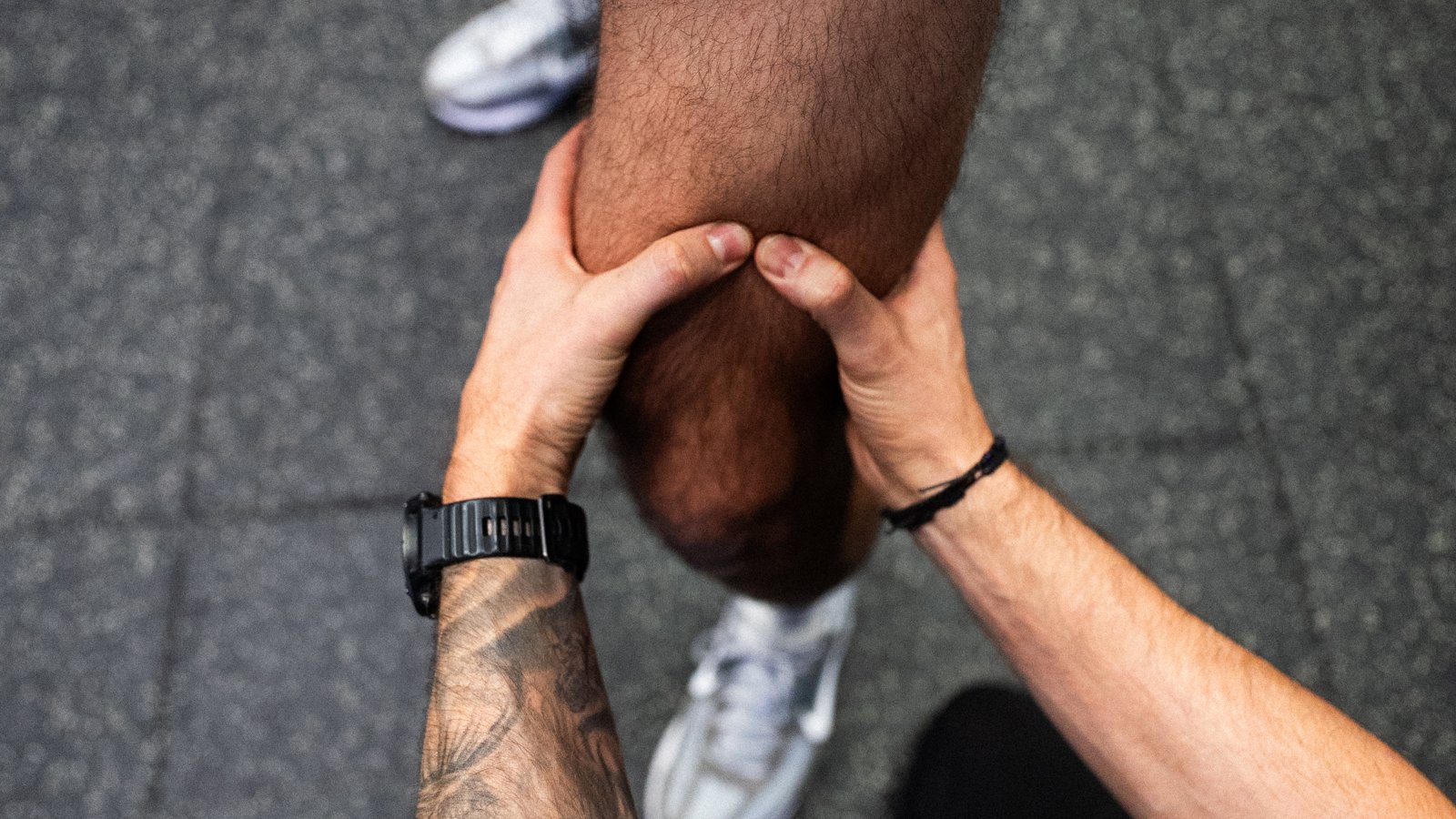
If you live in Caroline Springs and you have had a grumbling Achilles, a sore outer elbow, a painful shoulder or a knee that burns on the stairs for longer than six weeks, you have probably already tried the standard advice. Rest it. Ice it. Take some anti-inflammatories. Wait. And it probably came good for a week or two, then came straight back the moment you went for a run, picked up the kids, or got back under the bar at the gym. That pattern is the signature of tendonitis, and it is one of the most commonly mismanaged problems we see at Injury Active Clinic.
The reason it keeps coming back is simple. Rest reduces the symptom without changing the thing that caused it. Tendons do not get stronger while you sit still. They get weaker, and the next time you load them they are even less prepared than they were before.
Why "tendonitis" is usually the wrong word
The suffix "itis" means inflammation. For decades that was the assumption: an irritated tendon full of inflammatory cells, best managed with rest and anti-inflammatories. Then researchers started looking at the tissue itself and found something different. Most long-standing tendon pain shows disorganised collagen, increased ground substance and changes to the cells within the tendon, with very little classic inflammation present.
Cook and Purdam (2009) described this as a continuum, running from a reactive tendon that is simply irritated by a sudden spike in load, through to tendon disrepair, and then to degenerative change where the structure itself has altered. An international consensus group led by Scott and colleagues (2020) settled on "tendinopathy" as the preferred clinical term for persistent tendon pain and loss of function.
Most people still search for "tendonitis", so we use the word. But the distinction matters enormously for treatment. If the problem is not primarily inflammation, then an anti-inflammatory strategy is aimed at the wrong target. That is one reason Coombes, Bisset and Vicenzino (2010), in their review published in The Lancet, found that corticosteroid injections for tendinopathy often produced good short-term relief but poorer outcomes at longer follow-up compared with other approaches. Short-term comfort is not the same as a fixed tendon.
What tendons actually respond to
Tendons respond to load. Progressive, measured, well-timed load. That is the single most consistent finding across the tendinopathy research of the last three decades.
Alfredson and colleagues (1998) published the trial that changed Achilles management, showing that a structured heavy eccentric calf loading programme produced substantial improvements in a group of patients who had otherwise been scheduled for surgery. Since then the model has broadened. Malliaras and colleagues (2013) reviewed loading approaches for Achilles and patellar tendinopathy and found that several formats can work, which points to a useful conclusion: the specific exercise shape matters less than getting the dose, the progression and the consistency right.
Rio and colleagues (2015) added another piece, showing that heavy isometric holds produced an immediate reduction in patellar tendon pain. That is clinically handy, because it gives us something that can calm an angry tendon without resorting to complete rest.
The thread running through all of it is that tendons need stimulus to remodel. Removing load entirely is not neutral. It is a decision to let the tissue become less capable.
The tendons we see most often in the Caroline Springs catchment
Tendon pain is not random. It tracks load history, and the pattern we see reflects how people in Melbourne's western suburbs actually live and train.
- Achilles tendinopathy. Typically in runners who added distance or speed too quickly, or in people returning to running after a layoff. Classic morning stiffness for the first few steps out of bed.
- Gluteal tendinopathy. Pain on the outside of the hip, worse lying on that side at night or after long walks. Often mislabelled as bursitis.
- Rotator cuff related shoulder pain. Common in trades, warehouse work and anyone who has recently increased overhead pressing.
- Lateral elbow tendinopathy. Still called tennis elbow, though most people who get it have never played tennis. Gripping, lifting and repetitive forearm work are the usual drivers.
- Patellar tendinopathy. Pain at the bottom of the kneecap in jumping and change-of-direction sports, and in people who have ramped up squatting volume.
Different sites, same underlying story: load capacity got outpaced by load demand. Our job is to work out exactly where that gap opened up, because the fix is specific to the cause, not to the label.
How we treat tendonitis at IAC Ravenhall
Our Ravenhall clinic is the closest Injury Active Clinic location to Caroline Springs, roughly a ten minute drive down the Western Freeway, and it serves the Caroline Springs, Burnside, Deer Park, Taylors Hill and Rockbank catchment.
The first appointment is an assessment, not a quick rub and a stretch sheet. We take a detailed load history: what changed in the four to twelve weeks before symptoms started, your training or work volume, footwear, sleep, previous injuries on the same side. Then we test. We look at how the tendon behaves under load, how much strength you have through the whole chain above and below it, and how your movement patterns distribute force. A painful Achilles is often a calf capacity problem. A sore shoulder is often a mid-back and scapular control problem. We are looking for the cause, not just the sore spot.
From there you get one plan. Not a set of separate appointments with separate goals, but a single coordinated approach delivered by one integrated team. Hands-on treatment is used where it earns its place, to reduce protective muscle tone, improve tolerance and make loading more comfortable in the early stages. It sits alongside the loading programme rather than competing with it.
The part that makes the difference is what happens next. Our rehab gym is in the same building at Ravenhall, so the progression from treatment table to loaded rehabilitation happens in the same visit, under the same plan, with the same team watching how you move. Strength and conditioning is not a separate phase you graduate to once the pain settles. It is the treatment. We build tendon capacity deliberately, we measure it, and we progress it as the tissue responds. Many patients find that having the loading supervised, rather than handed over as a printed sheet, is what finally gets a long-running tendon problem to shift.
Pain does not always mean damage
One of the most useful things we can explain to someone with a four month old tendon problem is that pain during rehab is not automatically a sign of harm. Tendons frequently tolerate a low, predictable level of discomfort during loading while still improving. The clinically useful question is not "did it hurt?" but "how did it behave in the 24 hours afterwards?"
This matters because fear-avoidance is a real driver of chronicity. People stop running, stop lifting, stop walking the dog, and six months later the tendon is less capable, the surrounding muscles have deconditioned, and the problem is harder to solve than it was at week three. Motion is medicine here, provided the dose is right. We set clear markers for what is acceptable and what is not, so you are not guessing.
Keeping it away
Tendinopathy has a frustrating recurrence rate, and the reason is predictable. People stop the programme the week the pain stops. Symptoms resolve well before tendon capacity has been rebuilt, which leaves a gap that the next training block or busy work period walks straight into.
So the final phase of care is the one we protect most. We keep progressing load past the point of symptom relief, we rebuild capacity for the specific demands you are going back to, whether that is a half marathon, a 12 hour shift on concrete or Saturday footy, and we give you a maintenance dose you can realistically sustain. Find the cause, fix the problem, keep it away. The last part is not marketing. It is the part that determines whether you are back here in eight months.
If tendonitis has been limiting you for more than a few weeks, it is unlikely to resolve on its own with more rest. Caroline Springs residents can be assessed at our Ravenhall clinic, and we also see patients at Altona. Book a consultation at any of our Melbourne clinics to discuss your situation.
Related conditions & services
Ready to move better?
Book an appointment with our team and let's get to the root cause of what's bothering you.