
Blog / Pain Science
Strength Training After 50: What the Research Actually Says
Why heavier loads matter more than steps for bone density, muscle mass, and independence
August 2026 · 7 min read
You've been told 10,000 steps a day keeps you healthy. You've heard resistance bands and light weights are safer after 50. But here's what the research actually shows: without progressive strength training using meaningful loads, you're losing muscle mass at 3 to 8 percent per decade after 30, and that loss accelerates dramatically after 50.
Walking won't stop it. Yoga won't reverse it. Only progressive resistance training with genuinely challenging weights can maintain and rebuild the muscle, bone density, and functional capacity you need for independence.
The Sarcopenia Problem Nobody Talks About
Sarcopenia, the age-related loss of muscle mass and strength, affects up to 50 percent of adults over 80. But it starts decades earlier. Cruz-Jentoft and colleagues (2019) demonstrated that muscle strength declines faster than muscle mass itself, meaning you're getting weaker even faster than you're shrinking.
This isn't just about looking fit. Muscle weakness predicts falls, fractures, hospitalisation, and loss of independence better than almost any other health marker. Yet most people over 50 are prescribed walking programmes and gentle stretching when what they need is progressive overload.
At our Ravenhall clinic, we see this daily: clients who've been told they're too old to lift heavy, that they should stick to machines, that free weights are dangerous. The evidence says the opposite. The Australian and New Zealand Society for Sarcopenia and Frailty Research recommends resistance training at 70 to 85 percent of maximum capacity for optimal muscle and bone adaptation.
Why Walking Isn't Enough for Your Bones
Bone responds to mechanical stress through a process called mechanotransduction. Walking provides about 1 to 1.5 times body weight of loading through your skeleton. Sounds good until you realise that's the same load your bones experience every single day. No new stimulus, no adaptation.
Watson and colleagues (2018) from Griffith University ran the LIFTMOR trial, putting postmenopausal women with low bone density through eight months of heavy resistance training: deadlifts, squats, overhead press, and jumping chin-ups at 80 to 85 percent of their maximum capacity. The results? Significant improvements in bone density at the spine and hip, plus dramatic improvements in functional performance.
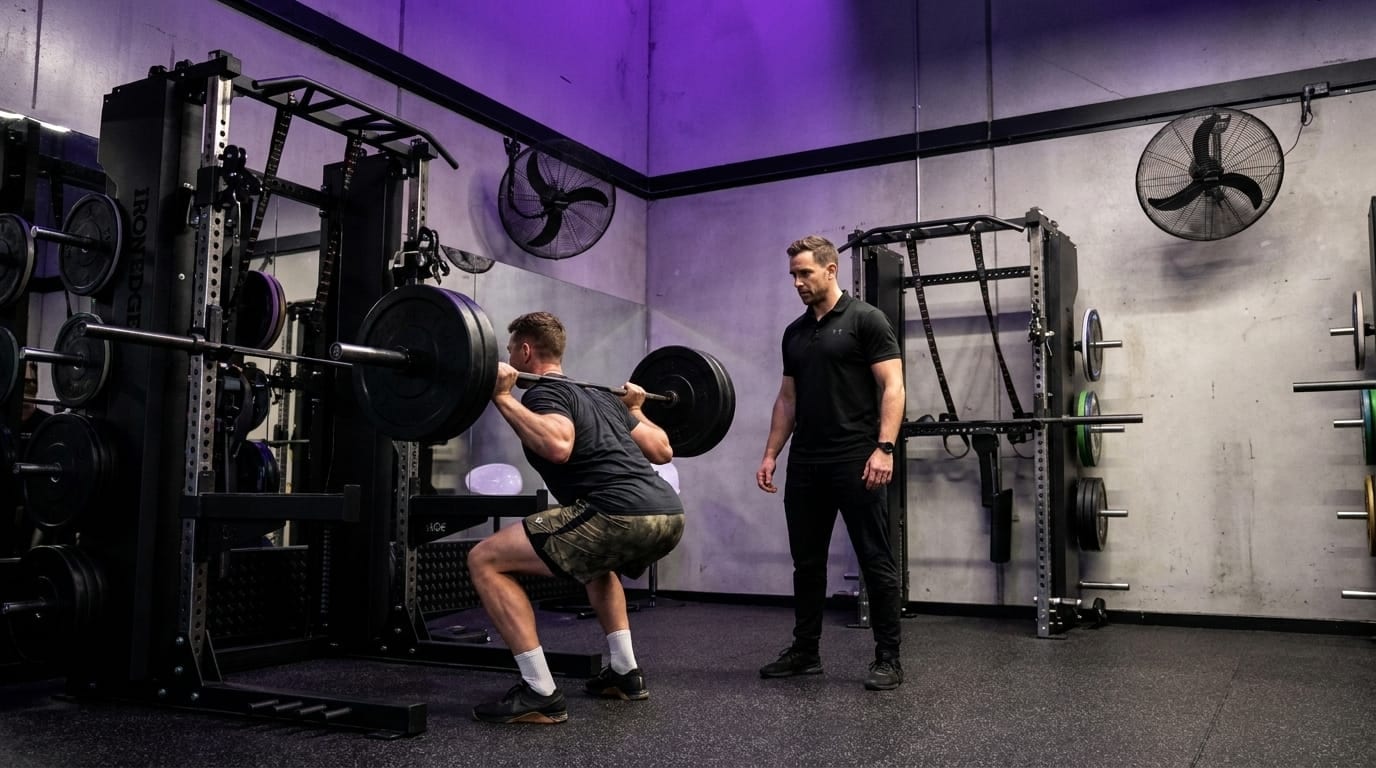
These weren't young athletes. These were women with osteoporosis lifting heavy weights twice a week. No injuries. No compression fractures. Just stronger bones and better function. The key was proper technique, progressive loading, and supervision, exactly the approach we take with integrated strength programming at IAC.
The Fear Factor: Why People Avoid Real Strength Training
Most adults over 50 have been conditioned to fear heavy weights. They've been told their backs will blow out, their joints will wear down, their bones might snap. This fear-avoidance behaviour, ironically, accelerates the very deconditioning it's meant to prevent.
Pain doesn't equal damage, and motion is medicine. Your spine isn't fragile. Your joints don't wear out from normal use. In fact, the opposite is true: tissues adapt to the demands placed on them. Cartilage needs compression and decompression to maintain health. Tendons need tension to stay strong. Bones need impact and resistance to maintain density.
We find the cause of your limitations, whether that's previous injury, fear, or simple deconditioning. We fix the problem through progressive loading and movement retraining. We keep it away by building genuine resilience, not through rest and avoidance.
What Effective Strength Training Actually Looks Like After 50
Forget the pink dumbbells and resistance bands. Effective strength training for adults over 50 looks remarkably similar to effective strength training at any age: compound movements, progressive overload, adequate recovery.
The American College of Sports Medicine guidelines are clear: 2 to 3 sessions per week, 8 to 12 repetitions at 70 to 85 percent of maximum capacity, progressing load by 5 to 10 percent when you can complete all sets with good form. This isn't extreme. This is the minimum effective dose for maintaining muscle mass and bone density.
Key movements include squats (or leg press if needed), deadlift variations, rows, presses, and loaded carries. Yes, you might start with a trap bar deadlift from blocks rather than from the floor. Yes, you might begin with goblet squats rather than back squats. But you progress toward meaningful loads, not away from them.
Our integrated approach means you're not bouncing between different practitioners with different philosophies. One team, one plan, whether you're dealing with arthritis, old injuries, or simply wanting to age strongly. The clinic team coordinates hands-on treatment with progressive strength work, all under one roof.
The Recovery Question: Can Older Adults Handle Heavy Training?
Recovery capacity does change with age, but not as much as you'd think. Older adults can handle similar training volumes to younger adults when programming is appropriate. The key differences? You might need 72 hours between heavy sessions instead of 48. You might benefit from more warm-up sets. You definitely need adequate protein (1.2 to 1.6 grams per kilogram of body weight daily, higher than younger adults).
What you don't need is to train like you're made of glass. The biggest risk factor for injury in older adults isn't heavy training; it's rapid spikes in training load. Start conservatively, progress systematically, and your body will adapt. This is exactly why strength and conditioning isn't separate from rehabilitation at IAC; it IS the rehabilitation.
Beyond the Gym: Real-World Strength Matters
The point isn't to deadlift for the sake of deadlifting. It's to maintain the ability to pick up grandchildren, carry groceries, get up from the floor, climb stairs without holding the rail. Functional capacity comes from genuine strength, not from practicing functional movements with tiny weights.
Research consistently shows that maximum strength correlates strongly with functional performance in older adults. The stronger you are in absolute terms, the easier daily tasks become. When getting out of a chair requires 50 percent of your maximum leg strength instead of 90 percent, you have reserve capacity. You're resilient, not fragile.
This philosophy drives everything at IAC. Whether you're recovering from back pain or just want to stay active and independent, the approach is the same: build genuine capacity through progressive loading, not just manage symptoms.
The evidence is clear: adults over 50 need heavy strength training more than any other age group. Not in spite of ageing, but because of it. The question isn't whether you should strength train after 50, but whether you can afford not to.
Ready to build genuine strength, not just go through the motions? Book a consultation at any of our Melbourne clinics to discuss your situation.
Related conditions & services
Ready to move better?
Book an appointment with our team and let's get to the root cause of what's bothering you.