

Train With Pain #23: Oh My Glutes (and a New Toy for the Gym)
38km, a 45 minute AMRAP, the VALD ForceFrame and why Bulgarians are the king of booty gains.
October 2026 · 7 min read
In the Training Cave
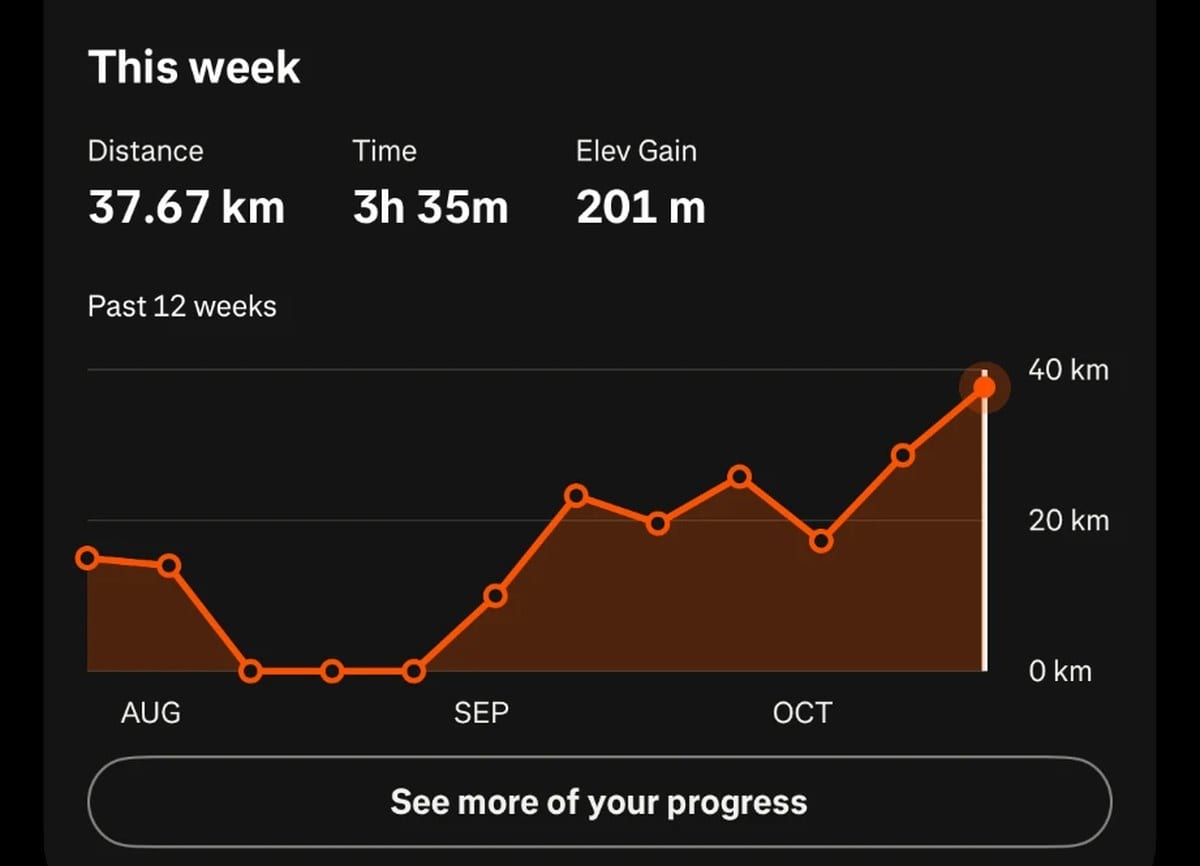
Another huge week of work and training, made even better by the beautiful weather Melbourne has been turning on. I'm well past easing back in after my winter trip and I'm deep in the training cave right now.
Last week I racked up 38km of running, alongside four strength sessions and one conditioning session. I loved every minute of it. The body is adapting well and I'm making progress.
Hyrox is roughly six weeks away, and I'm heading into this last block feeling good and ready to crank it up.
Saturday Brought the Fire
Saturday's conditioning session gives me that end of week, Friday beers feeling. The closer we get to the weekend, the more excited I am to see everyone in the morning getting after a bit of fitness. I'm not sure whether that makes me a fitness fanatic or just a bit sad, but I don't care either way.
Tomorrow our 45 minute AMRAP block moves into week three of six. The running structure stays the same but the movements change. The idea behind these six weeks is simple. If you've been flirting with running, we're building you up towards a 5km. If you're new to conditioning, we're getting you comfortable with low level aerobic work for 45 minutes. That might be fast walking or bike work, mixed with some kettlebell movements.
It's turning out exactly how I planned it, whatever everyone's starting point. And how good is that feeling afterwards? The sense of achievement after working hard sets the rest of your day up perfectly.
Over the next 12 months we'll progress this into a full engine block using the bike, run, ski and row.
We've Upgraded Our Testing
Everyone who's come through our gym programme has met the handheld dynamometer, the little device we use to measure strength. It's helped us put real numbers on your progress and show what's been working, which has been brilliant to see.
I've always had one reservation about it though. There's too much room for error, especially with a strong person. With a handheld device the tester has to hold their ground against you. If you're stronger than the person holding it, we end up measuring them, not you.
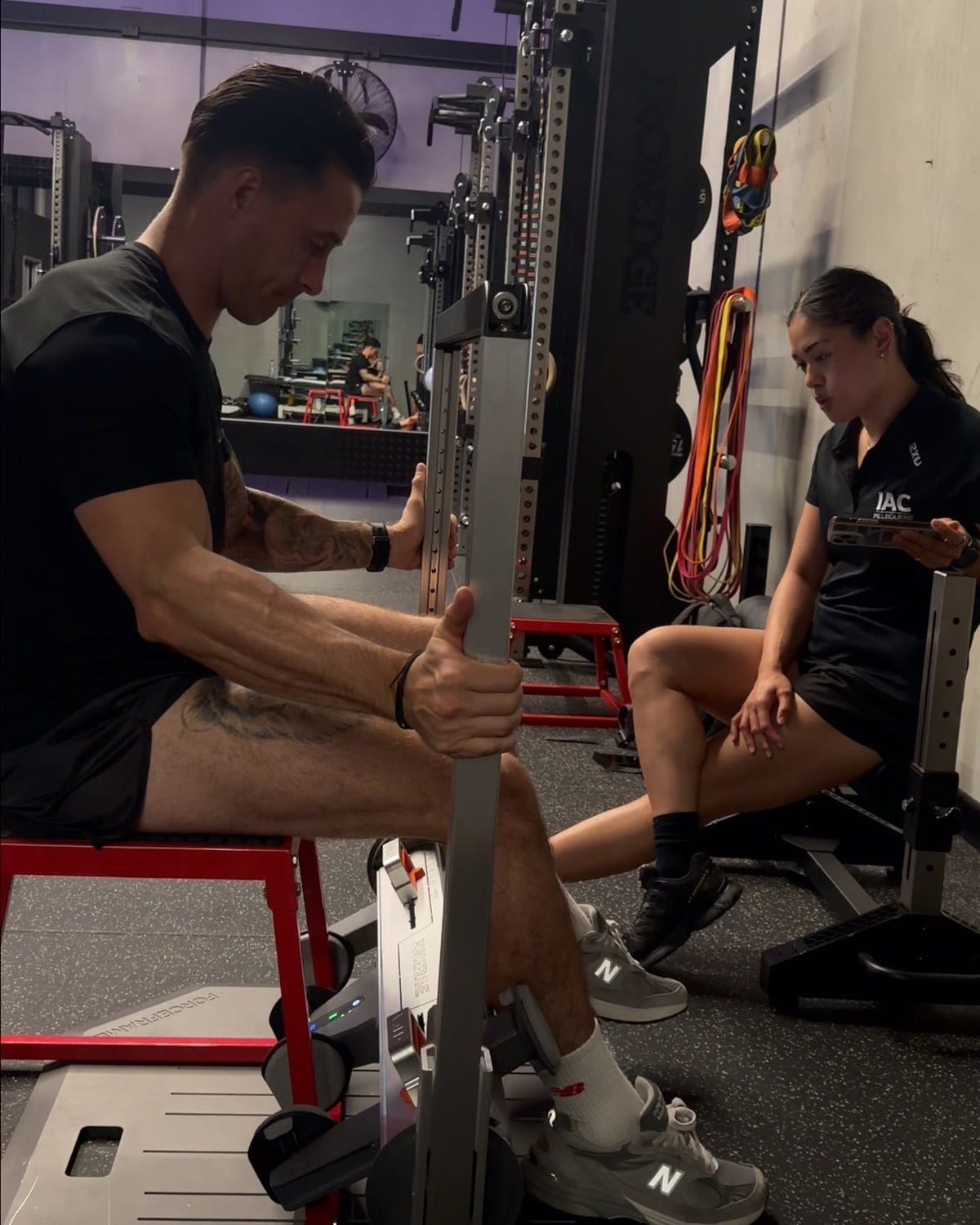
So it's time to upgrade to the VALD ForceFrame. It's a fixed steel frame with force sensors built in. You push or pull against padded restraints that are locked in place, so the frame holds firm no matter how strong you are. It measures your hips, knees, ankles and shoulders, compares your left side to your right, and shows how quickly you produce force, not just how much. Because the setup is identical every time, your week 1 and week 6 results can be compared fairly, and so can your test a year from now.
We're also sectioning off the back end of the gym as a dedicated rehab and testing space. Over the next 12 months we'll keep improving it, so members feel comfortable doing their rehab while a class is running, and our practitioners have the room to do their job properly.
Data is king. It shows us what we're doing well and it will shape how we work in the future.
We're Looking for a Coach
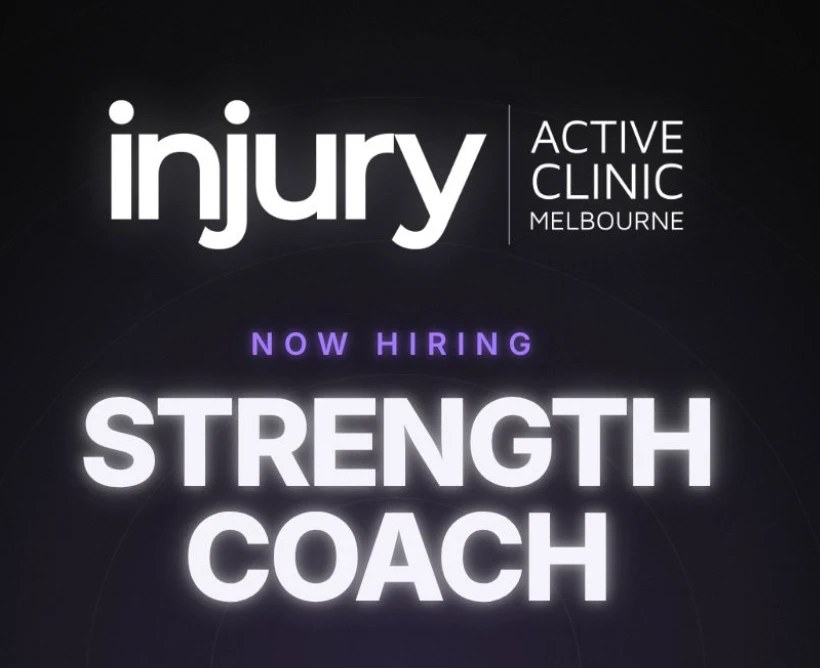
With Sam starting his MSc in Jan and as our classes keep growing, we need another set of hands on the floor. We're looking for a coach to join the team.
This isn't a typical gym job. In our classes, rehab and strength are the same programme. You'd be coaching people at very different stages, from someone who's nervous to bend over after a back flare up, to someone chasing a new PB, often in the same session. You'd work side by side with our osteos and myos, on the same plan for the same person.
A lot of people who walk through our door are stuck in the fear avoidance cycle. Something hurts, so they stop moving. They lose strength and confidence, and the next time it hurts even more. A great coach breaks that cycle. They scale the movement so it feels safe, build confidence one rep at a time, and watch someone go from wincing through a warm up to loving their training.
Ideally you're degree qualified in exercise science, exercise physiology or strength and conditioning, energetic, you genuinely love coaching, and you care about getting people out of pain, not just through a workout.
If that's you, or you know someone who'd be perfect, the details are at injuryactive.com.au/careers, or email info@injuryactive.com.au.
Summer Merch Run
Thanks to everyone who's shared their interest. I'm going to try and organise some samples so you can check them out in person.
I'll keep you updated.
Peak Life (and Sore Glutes)

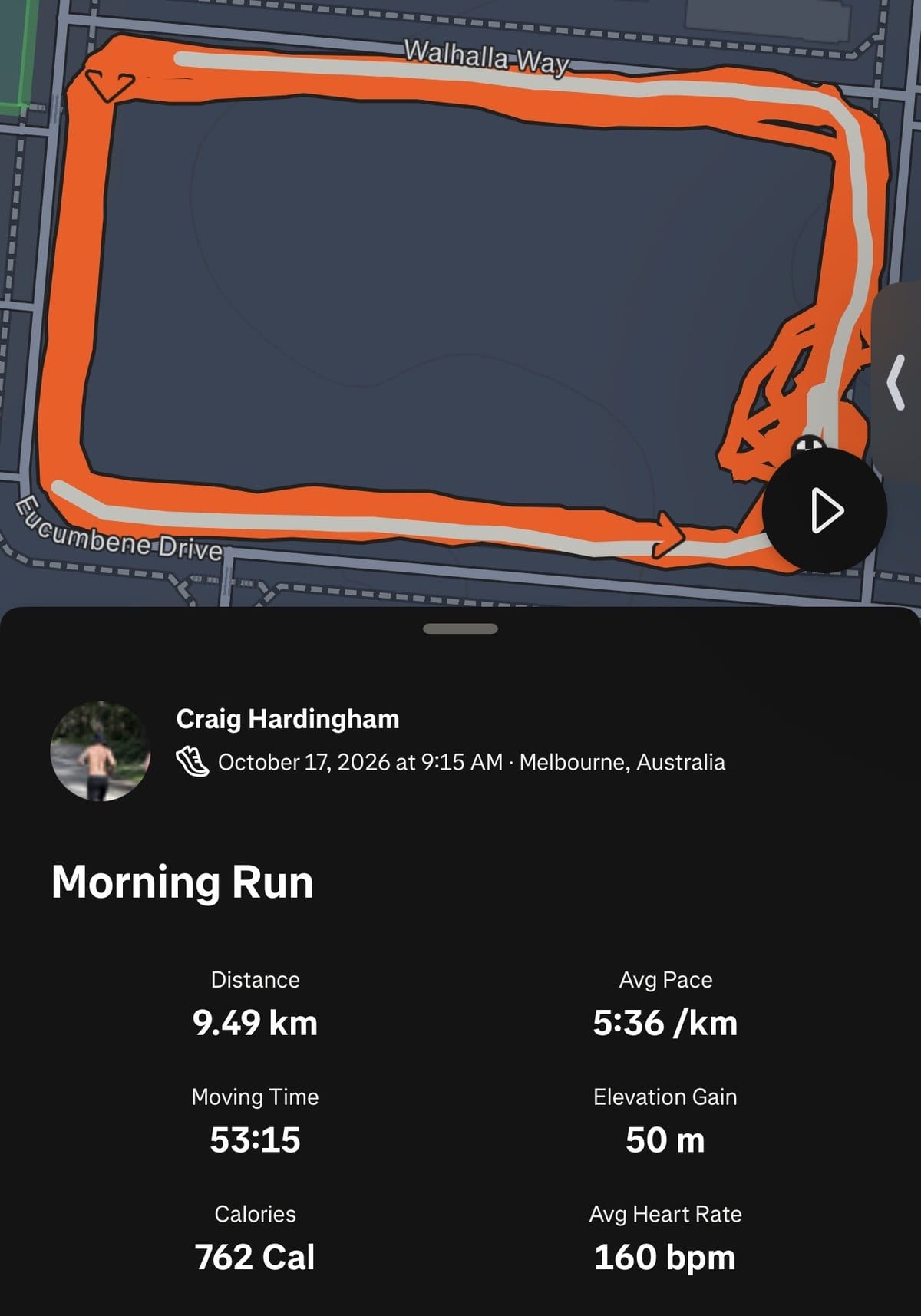
Sunday's cruisy 16km around Albert Park was nothing short of what peak life looks like to me. The best view of the Melbourne CBD, right next to the water, catching up with a friend in beautiful weather, followed by coffee and 60 minutes in a rooftop hot tub. This is living, Barry.
Then came a tough few days of training, and the pinnacle was Bulgarians on Wednesday. Oh my GLUTES! I was meant to do running intervals yesterday, but I flipped my easy run and my intervals around because my glutes were just too sore.
So what makes the Bulgarian split squat so brutal? Your back foot sits up on a bench and your front leg does almost all the work. As you lower down, your front hip bends deeply while it's carrying load, which puts glute max on a long stretch. That's exactly where it works hardest. Lean your chest forward slightly and take a slightly longer step, and you shift even more of the work into the glute rather than the quads. Single leg work also means there's nowhere to hide. Your stronger side can't quietly take over like it can in a normal squat, so the weaker side finally gets trained properly.
Glute max is the powerhouse of the body. It's your biggest muscle, and its main job is hip extension: driving your hips forward when you stand up from a chair, climb stairs, run, jump or lift something off the floor. It also steadies your pelvis every time you land on one leg.
That's where it links to lower back pain. When the glutes aren't doing their share, the lower back muscles often end up doing their job for them, and they don't love it. Research consistently finds that people with persistent lower back pain tend to have weaker, less enduring hip muscles. Strengthening the glutes is one of the most reliable tools we have for getting someone with a sore back moving and lifting with confidence again.
Those after booty gains, Wednesday and Friday are your days. That's where the single leg work lives.
Our City Clinic Plans
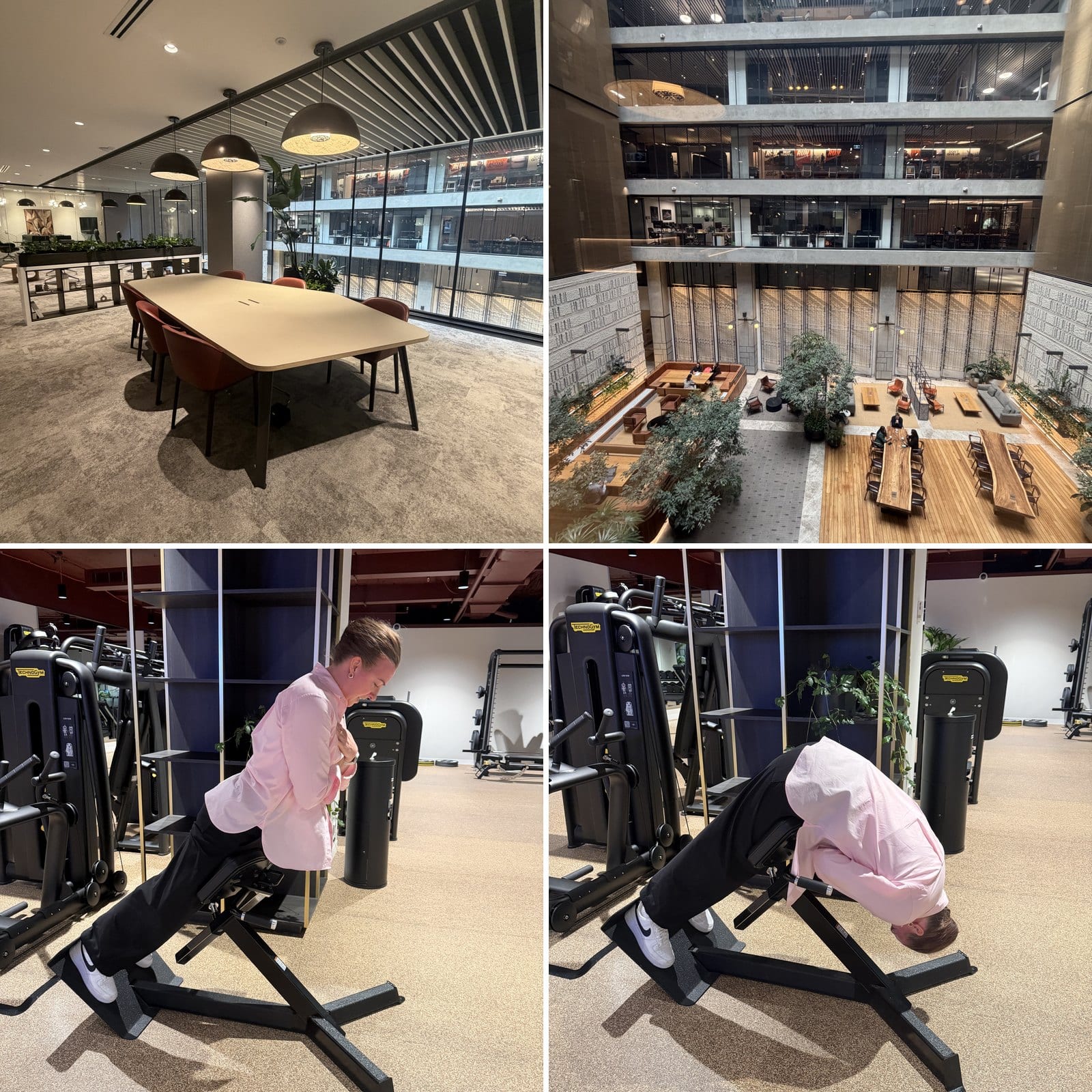
Last Thursday I headed into 161 Collins Street to run a drop in clinic for the Lockeroom gym members. I saw some really interesting cases and it was a great chance to meet more of their members.
I'm very excited about this partnership. The gym is looking to open in December or January, and we're ready to move into a room as soon as an office space becomes available.
Your Discs Don't Slip
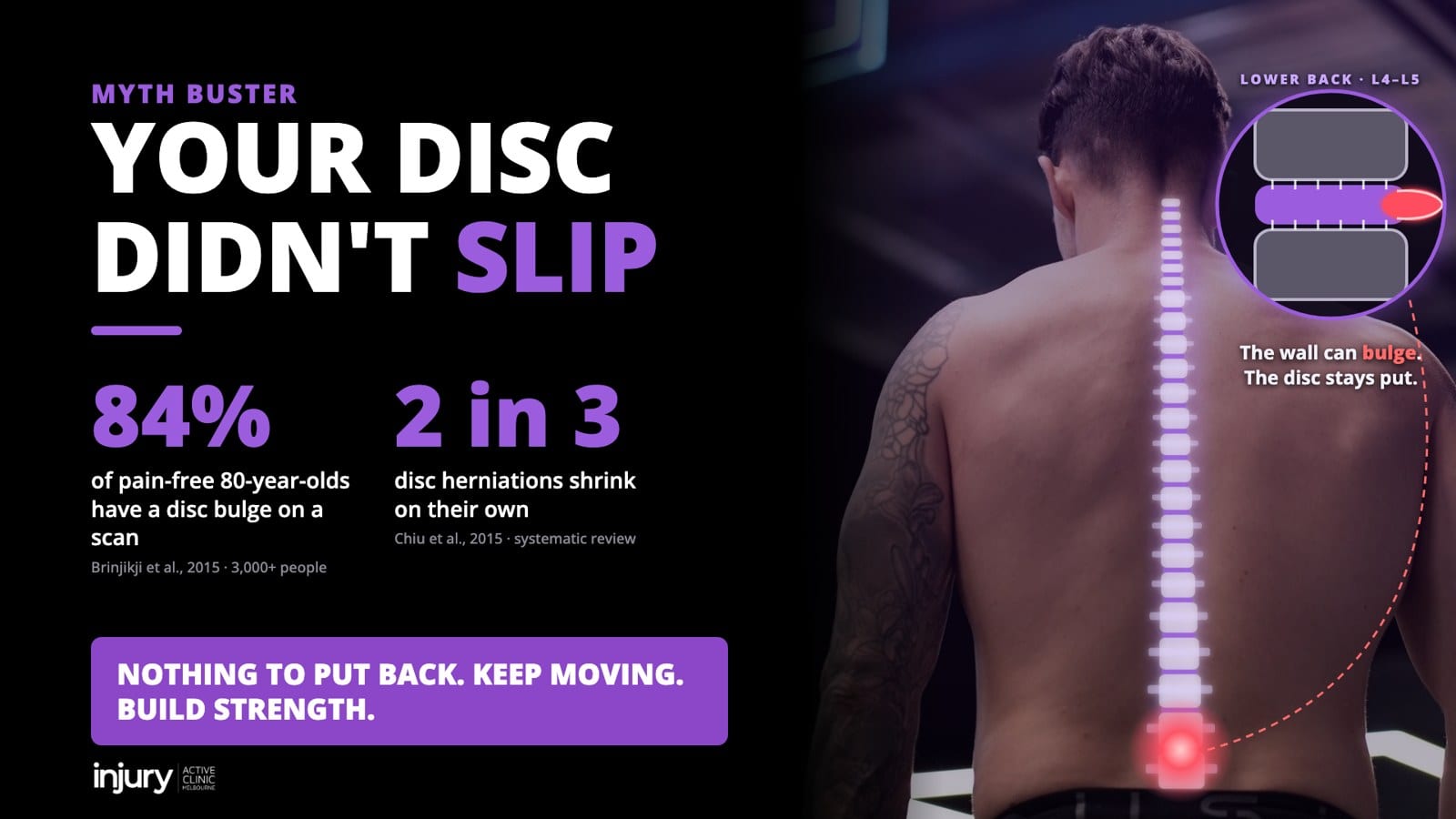
"My disc slipped" is one of the most common things we hear, and it's simply not true. Your discs are firmly bonded to the bones above and below, so they can't slide out of place.
What can happen is the outer wall bulges a little, and that's incredibly common. A large research review found disc bulges on the scans of 84% of 80 year olds who had NO back pain at all. Even when a disc does herniate, around two in three shrink on their own over time.
So there's nothing to put back in. Keep moving, build your strength gradually, and if you want a plan, we're here to help.
Help us spread the good word. Is there someone who needs to hear this? Send it to them.
Should You Rest a Sore Back?
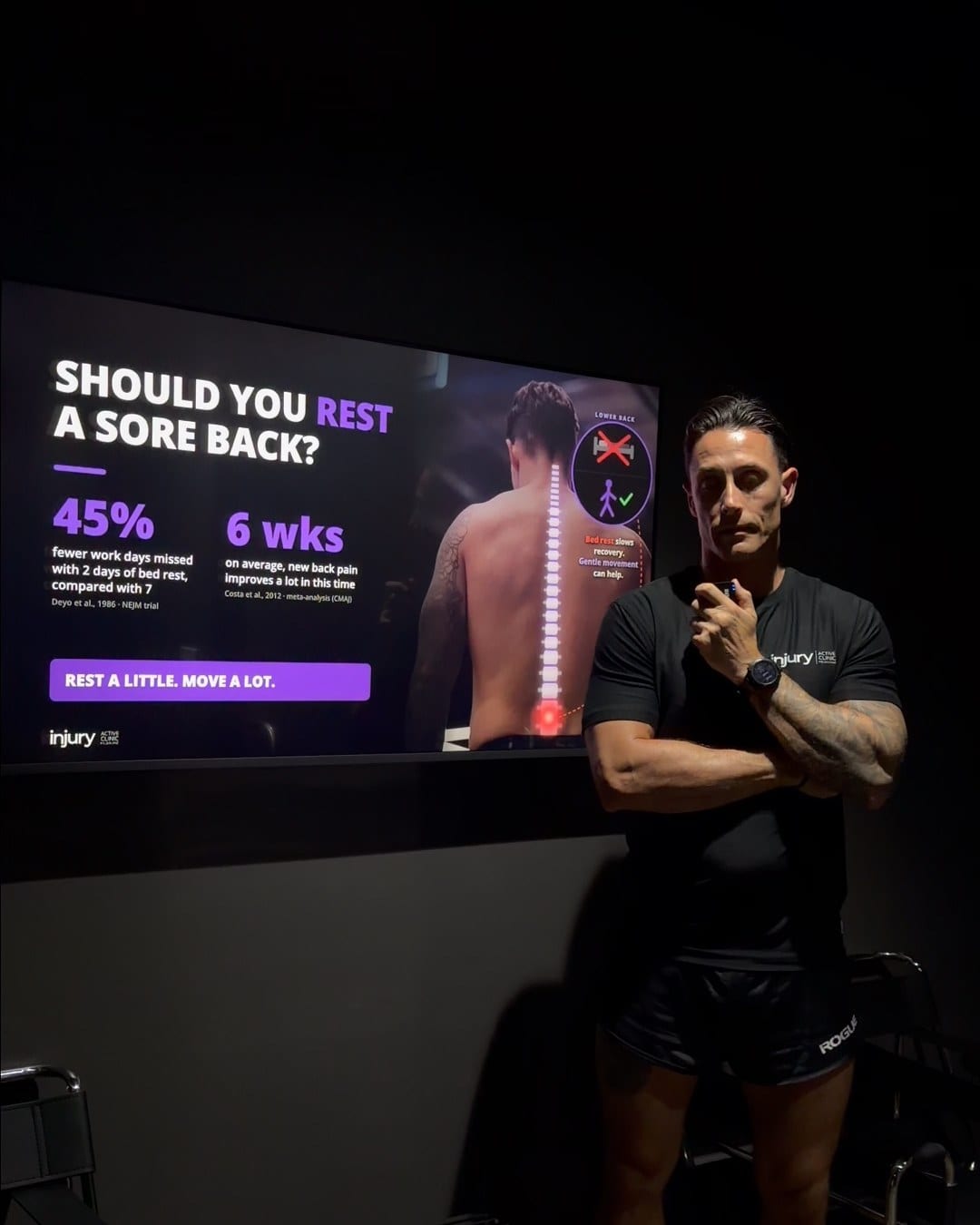
This week we filmed another one: should you rest a sore back?
When your back flares up, lying in bed feels like the safe option. It isn't. In a well known trial, people told to rest for two days missed 45% fewer days of work than people told to rest for seven. And on average, new back pain improves a lot in the first six weeks.
So rest a little and move a lot. Gentle walking, keep doing what you can, and build back up from there.
If you’re struggling with back pain and want a plan, grab our free 5 step back pain guide at injuryactive.com.au/back-pain-guide.
Christmas BBQ
Save the date: Saturday 19th December.
We'll have a big class at 9:30am, followed by Rosetta Coffee and a BBQ from 10:30am. Book in via "Courses" in the app.
Have a great weekend.
Chat next week,
Craig
Related conditions & services
Ready to move better?
Book an appointment with our team and let's get to the root cause of what's bothering you.