

Training with Pain #15: Race Week
Twelve weeks done. My half marathon race day plan, negative splits, carb loading, and the Winter Challenge.
July 2026 · 5 min read
Race Week
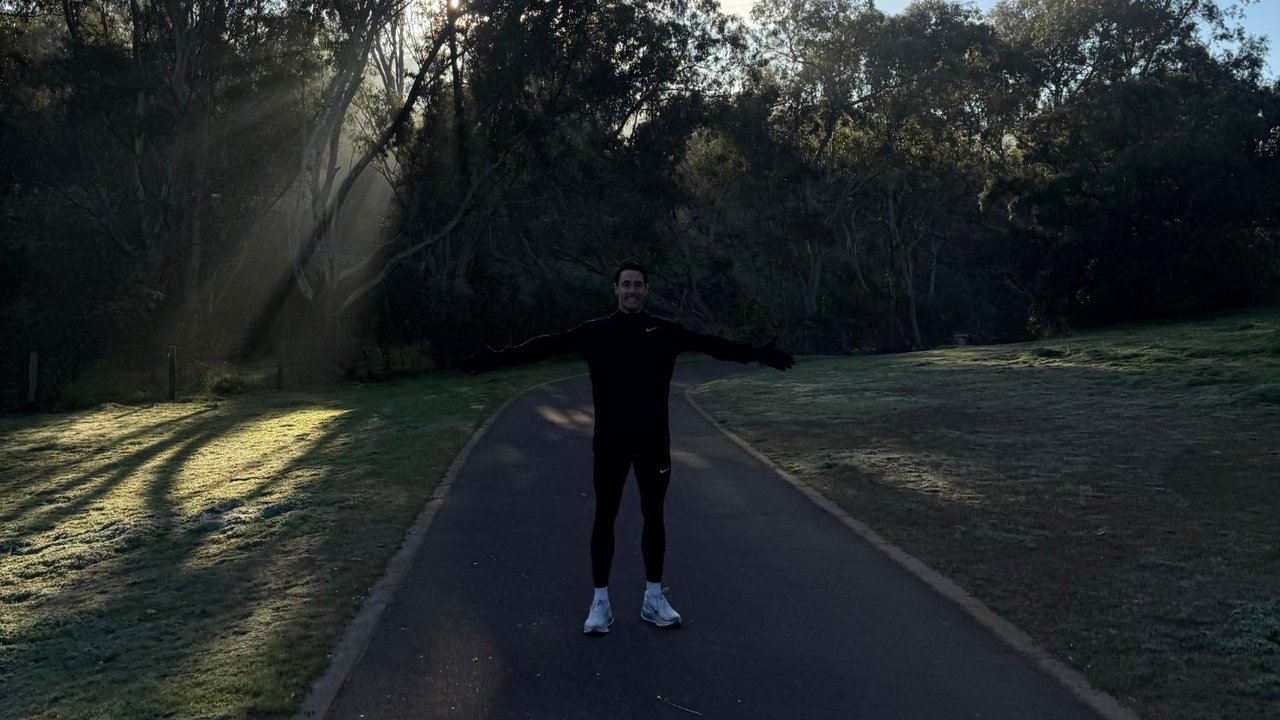
Wow.
Twelve weeks of hard running are behind me and it all comes down to Sunday morning. I still can't quite believe it's here.
There was a point halfway through this training block where I genuinely questioned whether I'd get to the start line. I wasn't feeling great mentally, the running was taking a lot out of me and I came pretty close to pulling the pin.
I'm glad I didn't.
The work has been done now. There's nothing left to gain this week. It's just about turning up healthy, sticking to the plan and seeing what happens.
Sunday is shaping up to be cold. Around 4 degrees, still dark when we start and thousands of people all standing around wondering why we voluntarily signed up for this.
I love it.
The race starts at 6:30am, but I'll aim to be there around 6:15am. It's about a 30 minute walk from where I'm staying, which is actually perfect. I'll use that as part of my warm up before jogging a little, doing some dynamic stretches and getting the legs moving.
The alarm will be set for 4:00am. Breakfast will be simple. Toast with honey a couple of hours before the race, plenty of fluids, then around 60g of carbohydrates in drink form about 30 minutes before the start. I'll carry two gels and take one around the 30 minute mark and another around the 60 minute mark.
I've practised this throughout training, so race day isn't the time to start experimenting.
The plan is to start around 4:25 per kilometre. That's probably a little slower than I think I can run, but I'd much rather feel like I've got something left after the first few kilometres than get carried away with everyone charging off the line.
If all goes well, I'll gradually build the pace as the race unfolds.
Negative Splits
The goal is to run a negative split after 10km. All that means is running the second half of the race quicker than the first.
It's one of the hardest things to do because everyone feels good early on. The temptation is to chase the pace from the gun and hope you can hang on. More often than not, that ends badly.
A negative split takes discipline. You hold yourself back early, stay relaxed, let everyone fly past you if they want to, then gradually pick people off over the second half of the race.
It's a much nicer feeling overtaking people at 17km than being overtaken.
If everything goes to plan, I'll be emptying the tank over those final few kilometres. That's the plan anyway. We'll see what Sunday brings.
Carb Loading
Over a normal week I eat around 300g of carbohydrates each day, mostly from oats, rice and fruit. Over the next couple of days I'll push that closer to 500g.
People often think carb loading is about eating as much pasta as possible the night before a race. It isn't. Your body stores carbohydrate as glycogen inside your muscles and liver. Think of glycogen as your fuel tank.
The more glycogen you have available when the race starts, the longer you can maintain a higher pace before fatigue really kicks in. It takes a couple of days to properly top those stores up, which is why most runners increase their carbohydrate intake over the two or three days leading into an event rather than trying to cram everything in the night before.
The key is keeping foods familiar. Nothing spicy. Nothing unusual. No "cheat meal because I've earned it." I've worked too hard over the last three months to ruin things with a dodgy dinner on Saturday night.
Winter Challenge
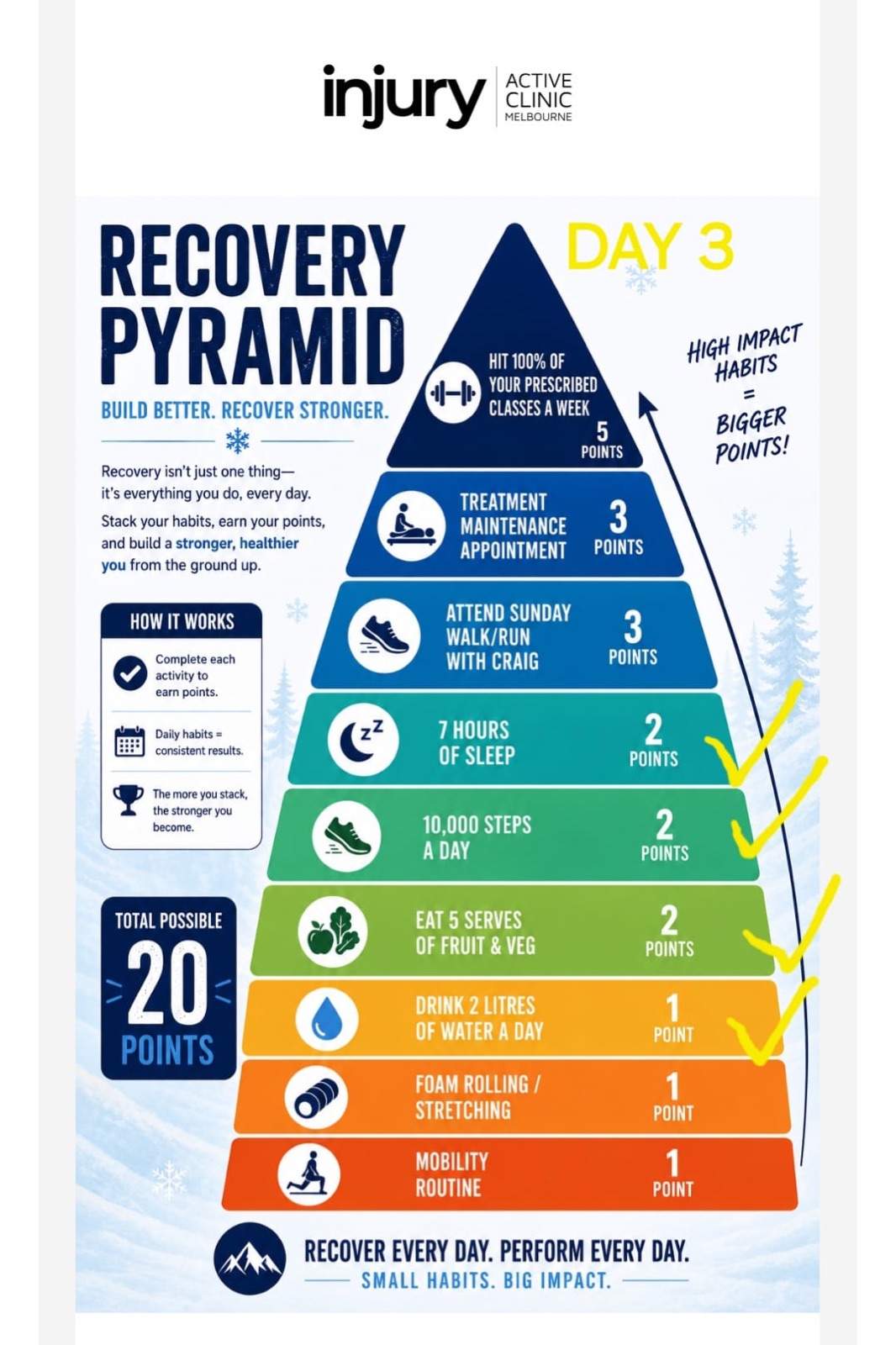
I've loved seeing the photos coming through this week. The steps. The gym sessions. The meals. The mobility. The sleep screenshots. Keep them coming.
The reason we're doing this isn't because one good week changes your life. It's because habits are built through repetition.
The first time you do something it takes effort because you have to think about it. The tenth time takes a little less. By the hundredth time you don't really think at all. It just becomes part of who you are.
That's why we haven't built this challenge around one massive goal. We've built it around the little things:
- Getting your steps in
- Turning up to training
- Eating your fruit and veg
- Getting enough sleep
- Doing your mobility
None of those things are particularly exciting on their own, but stack them together over four weeks and you'll feel the difference. Then you keep stacking them.
That's how long-term change happens. Not from one perfect day. Just lots of pretty good ones.
Next time I write this newsletter, the race will be done. Hopefully I'll have a medal around my neck, a coffee in my hand and a smile on my face.
Chat next week.
Craig
Related conditions & services
Ready to move better?
Book an appointment with our team and let's get to the root cause of what's bothering you.